Editorial blog
Thailand Beyond the First Impression
A long-form travel essay on how Thailand rewards slower, more attentive travel beyond the familiar postcards.
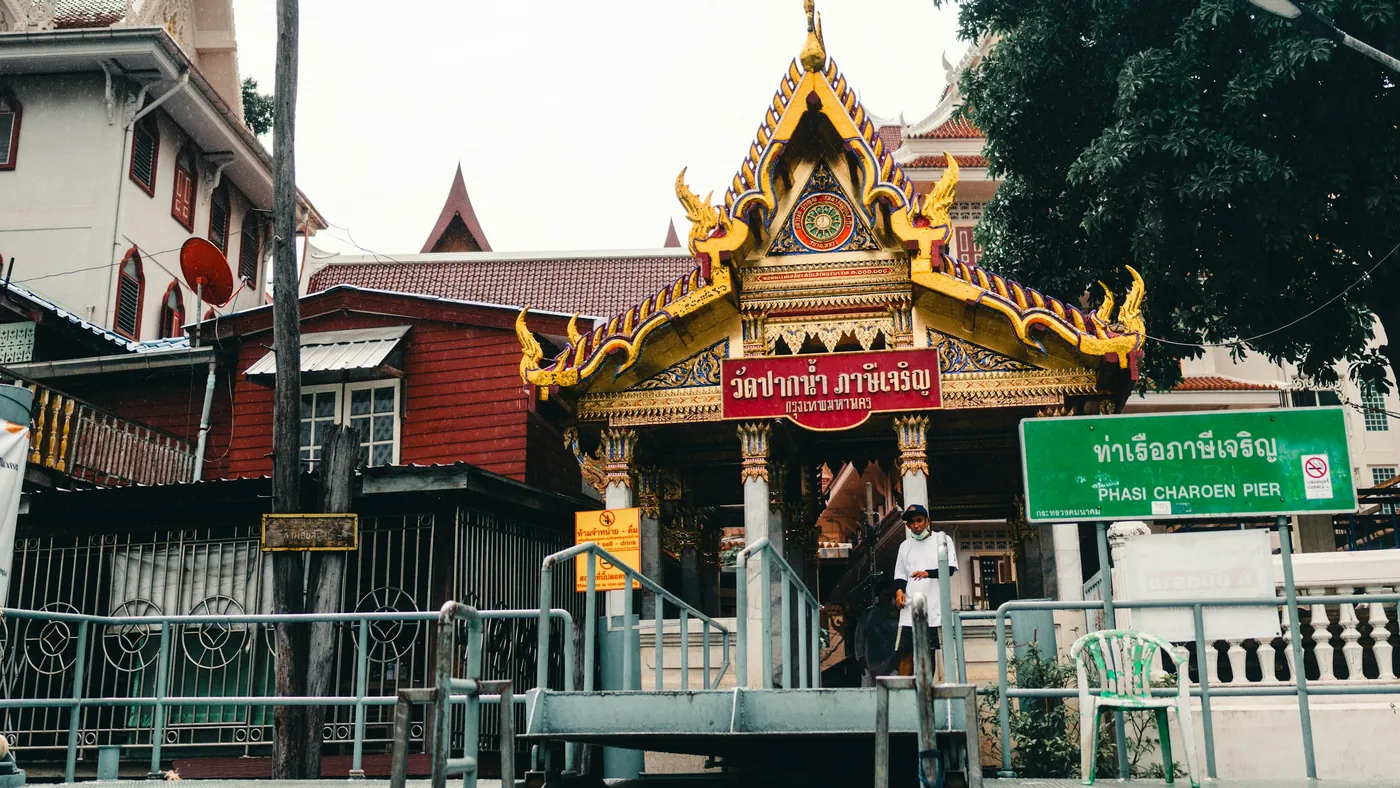
Thailand is one of those places that many travelers think they already know before they arrive. They have seen the long-tail boats, the limestone islands, the gold temples, the night markets, the plates of green curry and mango sticky rice. The images are vivid, and they are not false. But they are only the front door. The deeper pleasure of traveling through Thailand is that the country keeps changing register. It can be lush and noisy in the same hour, ceremonial and practical on the same street, polished for visitors and still intensely local around the next corner.
It also asks for a particular kind of attention. Thailand is easy to enjoy quickly, which is one reason it remains so beloved, but it becomes more interesting when the traveler lets the obvious pleasures lead into quieter ones. A beach may be the promise, yet the memory might be a ferry pier at dawn. A temple may be the landmark, yet the story might be the row of shoes outside the entrance. A meal may be famous, yet the revealing detail may be how patiently it is assembled.
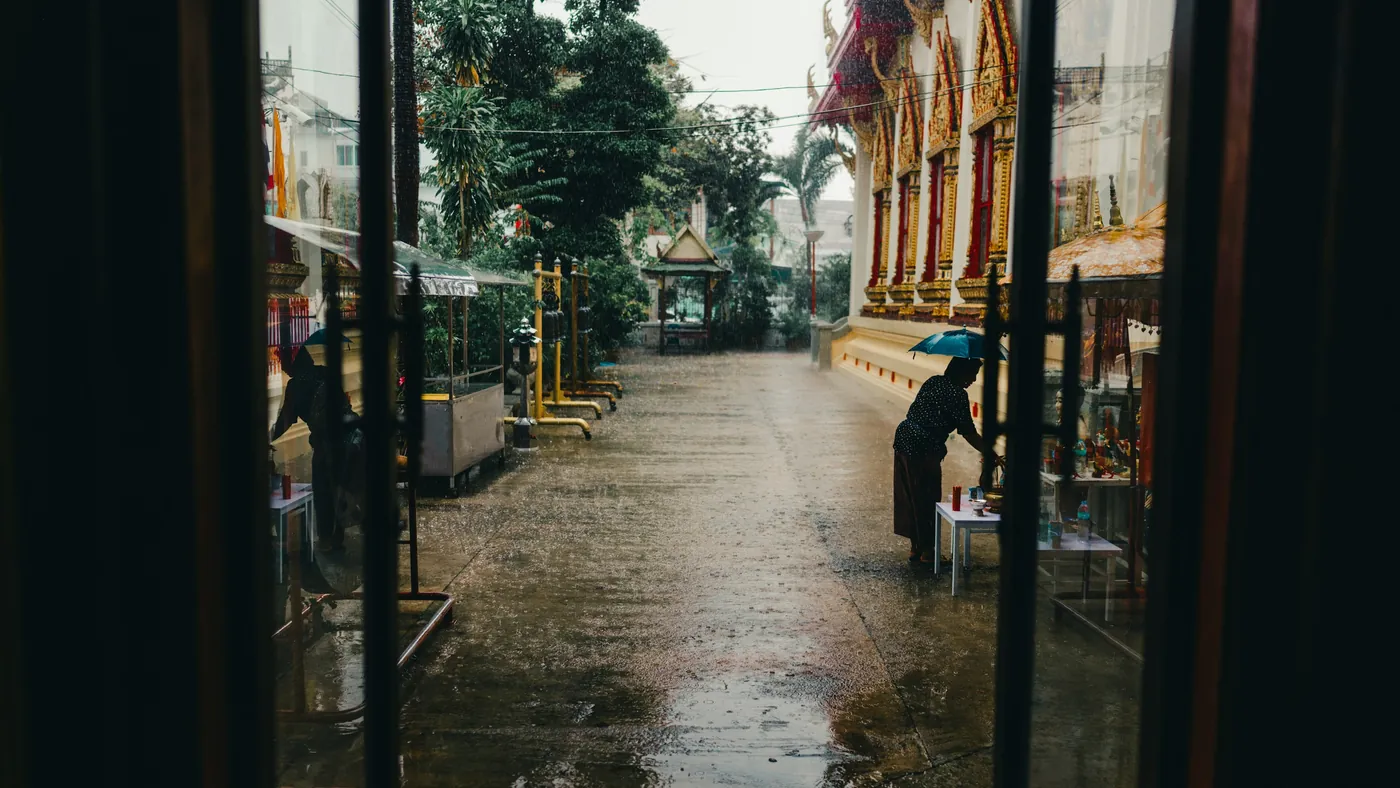
That is why Thailand rewards travelers who resist the urge to turn a first trip into a checklist. The country is built for movement: trains, ferries, domestic flights, songthaews, tuk-tuks, vans, motorcycles, canal boats and long overnight buses all stitch together a landscape that runs from dense capital city to mountain valley to rice field to island pier. Yet the best moments often happen when the itinerary slows down. A market vendor wraps herbs in newspaper. A temple dog sleeps beneath a naga staircase. A hotel breakfast opens into birdsong and diesel engines. A storm gathers, breaks and leaves the street shining.
For a travel writer, Thailand is not difficult because there is too little to say. It is difficult because there is too much. The challenge is to look past the obvious postcard and ask what kind of trip the place is inviting. Thailand can be an introduction to Buddhist daily life, a study in street food economies, a beach holiday, a design tour, a wellness retreat, a family adventure, a culinary education or a soft landing for a first independent journey in Southeast Asia. The more precisely a traveler defines the trip, the more generous the country becomes.
Begin With Bangkok's Layers
Bangkok is often reduced to a blur: traffic, malls, rooftop bars, temples, riverboats, heat. The city is all of that, but it is also a place of small rhythms. A shrine sits beside a shopping complex. Office workers carry garlands and iced coffee through a skywalk. Canal houses reveal a more amphibious version of the city, one where water is not scenery but infrastructure. The Chao Phraya River gives Bangkok its grand line, but the side canals and neighborhood markets give it texture.
A first visit should make time for the famous sights because they matter. The Grand Palace, Wat Pho and Wat Arun are not just ornaments in the tourist imagination; they are part of the city's religious, artistic and political vocabulary. But they become richer when balanced with less choreographed time: a ferry ride without urgency, a walk through an old market, a pause in a small temple courtyard, a meal eaten at a plastic table while the city moves around you.
Bangkok also teaches a useful lesson about Thailand as a whole: comfort and friction often sit close together. A traveler can sleep in a serene hotel, then step outside into a street that demands attention. That contrast is not a problem to solve. It is part of the place. Thailand is extremely hospitable, but it is not a stage set. The traveler who accepts that difference will see more than the one who tries to smooth every edge.
Read the Quieter North
Northern Thailand changes the tempo. Chiang Mai, Chiang Rai, Lampang, Nan and the smaller towns in between offer a different relationship to space and time. Mornings can begin with mist, temple bells, market steam and the scent of grilled pork. The architecture shifts toward teak, low walls, carved details and Lanna influence. The food changes too: khao soi, sai ua sausage, nam prik ong, sticky rice and bitter herbs make the north feel like a culinary region rather than a variation on a national menu.
Chiang Mai is the gateway most visitors know, and it remains useful because it offers a soft landing: good hotels, cooking schools, cafes, craft shops and access to hills and temples. But the city is at its best when approached with restraint. Choose a neighborhood and learn it. Visit a market twice. Notice how the old city changes between the morning alms round, the afternoon heat and the evening food stalls. The north rewards repetition because small details become visible only after the first sweep of novelty passes.
The mountains and rural valleys beyond Chiang Mai should not be treated as a simple escape from the city. They carry their own histories, ethnic communities, environmental pressures and tourism economies. Trekking can be meaningful when it is run responsibly and locally, but it can also flatten complex communities into scenery. Good travel here starts with better questions. Who operates the experience? Where does the money go? What is being explained, and what is being performed? The north is beautiful, but beauty is only the beginning of the story.
Choose the Coast With Care
Thailand's beaches are famous enough to distort trip planning. Many travelers begin with the islands because the images are irresistible: pale sand, clear water, palms, cliffs, beach bars, dive boats and slow sunsets. The coast can absolutely deliver that fantasy. But Thailand has several coastal personalities, and choosing well matters more than trying to see everything.
The Andaman side, including Phuket, Krabi, Koh Lanta and nearby islands, is dramatic and cinematic, with limestone formations, deeper blues and easy access to boat trips. The Gulf side, including Koh Samui, Koh Phangan and Koh Tao, has its own rhythm, with wellness resorts, diving culture, party pockets and quiet coves depending on where and when you go. Smaller islands can feel like a retreat, but they also ask more from the traveler: fewer services, more weather dependence and a greater need to respect local waste, water and reef limits.
A beach trip improves when it is planned around season, mood and movement. Do you want to dive, rest, eat, work remotely, travel with children, recover after a city-heavy itinerary or celebrate something? The answer should decide the island, not the other way around. Thailand is generous, but it is not one beach repeated. The right coast for a honeymoon may be wrong for a family itinerary, and the island that looks perfect in a photograph may be frustrating in monsoon season.
Let Food Set the Pace
Food is one of Thailand's great organizing systems. It tells a traveler where they are, what the climate supports, who has migrated through and how daily life is paced. Street food is not simply a cheap thrill, although it can be wonderfully affordable. It is a form of public expertise. A noodle vendor who has spent years perfecting broth or wok timing may offer a more precise sense of place than a more formal dining room.
In Bangkok, a day can be built around movement from breakfast jok to boat noodles to grilled seafood to late-night fruit. In the north, the pleasure might be a bowl of khao soi with pickled mustard greens and lime. In the south, turmeric, coconut, seafood, pepper and heat can make the meal feel sharper and more maritime. In Isan, grilled meats, som tam, larb and sticky rice speak to a region whose influence is everywhere in Thai eating, even when visitors do not realize it.
The best way to eat in Thailand is with curiosity and humility. Follow crowds, but do not assume every famous stall is the only worthwhile one. Learn a few dish names. Watch how locals order. Ask for spice levels honestly. Sit down when a place feels alive. Food writing about Thailand often leans on adjectives: fiery, fragrant, exotic, addictive. The better language is more specific. What kind of heat? What herb arrives first? What texture carries the dish? What does the vendor do with their hands? Those details move the experience from consumption to memory.
Plan a Route That Leaves Room
A strong Thailand itinerary is usually a shaped one, not a maximal one. Ten days can hold Bangkok, one northern base and one coast. Two weeks can stretch into a more satisfying arc. Three weeks allows the country to breathe. The mistake is not ambition; it is speed without purpose. Every transfer has a cost. A one-hour flight can still consume half a day once packing, taxis, check-in, weather and fatigue are included.
Build around contrast. Pair Bangkok with Chiang Mai, or a northern food journey with a quiet beach, or a design-led capital stay with a river town and an island. Leave pockets of unplanned time because Thailand is full of small invitations: a market that looks better than expected, a hotelier's suggestion, a festival, a rainstorm that changes the afternoon. For travelers building the practical side of a route, locally focused planning resources such as Tour Thai can be useful once the broad shape of the journey is clear.
The route should also account for the body. Thailand is hot, humid and stimulating. Long travel days followed by ambitious sightseeing can make even beautiful places feel like work. Schedule slower mornings. Hydrate. Do laundry. Book fewer things in the middle of the day. Build in one hotel that feels restorative rather than merely convenient. The luxury of travel in Thailand is not always price; sometimes it is simply having enough time to notice where you are.
Travel Well, Not Just Widely
Responsible travel in Thailand begins with recognizing that the country is not a playground built for outsiders. Temples require modest dress and calm behavior. Wildlife attractions deserve scrutiny. Beaches and reefs are fragile. Hill communities are not costumes. Workers in hospitality, transport and food service carry the emotional labor of making travel feel effortless. A good visitor understands that politeness is not a superficial rule; it is part of moving through the country with grace.
This does not mean traveling anxiously. It means traveling attentively. Learn basic greetings. Remove shoes when asked. Dress with respect in religious spaces. Pay fair prices without turning every exchange into a performance of bargaining. Choose operators who treat people, animals and landscapes with care. Read signs. Ask before photographing people. The reward is not moral self-congratulation. It is a better trip, because attention makes the traveler more present.
Thailand's great gift is that it can meet many kinds of travelers without becoming only one thing. It can be easy for a first-timer and complicated for anyone willing to look closer. It can be glamorous, humble, spiritual, funny, delicious, commercial, wild, gentle and exhausting, sometimes before lunch. The trick is to let those contradictions remain. A country with this much texture does not need to be simplified to be loved.
At the end of a Thailand journey, the memory that stays may not be the most famous sight. It might be the sound of a boat engine fading down a canal, the first spoonful of broth in a crowded shop, a temple roof after rain, a driver pointing out fruit trees, a quiet ferry crossing or the moment the evening heat finally loosens. Those are the images that turn travel into story. They are also the reason to go slowly enough to receive them.