Editorial blog
How to Write Tourism Board Content Briefs That Produce Better Stories
A field-tested approach to briefs that help writers create useful, distinctive and campaign-ready destination content.
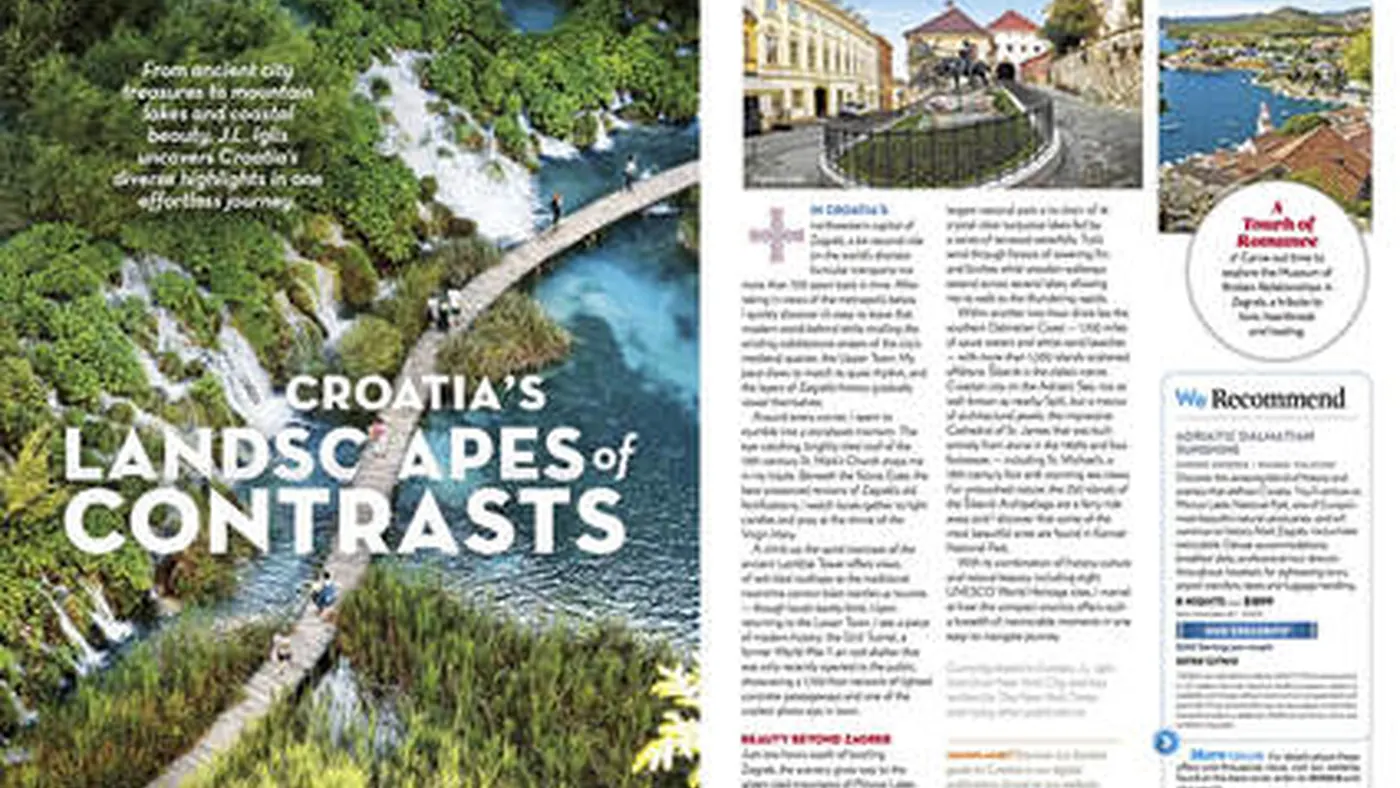
The strongest tourism content operations content does more than describe a subject. It gives the reader a reason to pay attention, a reason to believe, and a reason to move one step closer to a decision. That is why tourism board content briefs and destination editorial planning needs editorial thinking before it needs more copy. The assignment has to define what the reader is trying to solve, what the brand can credibly say, and what kind of evidence will make the story useful.
For destination marketers, tourism boards, PR teams and content leads, the central risk is briefs that ask for broad awareness but do not define audience, angle, proof, format or distribution. Readers notice when a story is built from generic claims. They also notice when a piece has been reported, shaped and edited with care. Jennifer's content creation work shows how publication-quality storytelling creates specificity, while her broader travel portfolio turns that discipline into brand work.
This guide breaks down a practical process that can give a writer enough strategy to make the story sharp while leaving room for reporting and discovery. It is written for teams that need content to work on a website, in a campaign, inside a sales conversation and as a durable proof point for the brand.
Start with the editorial angle, not the asset
A brief usually begins with a deliverable: article, landing page, city guide, brochure copy, byline or campaign story. The better starting point is the angle. In a seasonal city guide, multi-market itinerary campaign, cruise port guide, food trail, hotel partnership or cultural calendar, the team should ask what the reader needs to understand after one minute, five minutes and after sharing the piece with someone else. The angle is the controlling idea that keeps the content from becoming a pile of attractive details.
A strong angle also protects the brand from inflated language. Instead of saying that something is exceptional, the piece can show what makes it distinct: access, point of view, timing, design, service, craft, location, expertise or a combination of those elements. The more specific the angle, the easier it becomes to decide what belongs in the story and what should be cut.
Build proof before prose
The proof plan is the difference between polished content and persuasive content. For tourism content operations, proof may include field reporting, interviews, publication archives, service details, market context, sensory observation, itinerary logic, design facts, client voice or expert commentary. The right proof depends on the reader's question and the stage of decision the content serves.
Before drafting, collect the facts that carry the argument. If a paragraph needs to explain atmosphere, gather concrete details. If it needs to explain value, identify what the audience compares against. If it needs to explain trust, decide which credentials, sources or real-world observations belong in the piece. This is where travel journalism, branded destination guides and multi-platform editorial planning becomes practical rather than decorative.

Write a brief that gives the writer useful boundaries
A useful brief is neither a blank page nor a rigid script. It gives the writer the audience, purpose, required facts, avoid list, internal approvals and desired action. It also explains what the story should not become. In many projects, the most expensive mistake is asking for a destination overview when the campaign actually needs a decision-stage guide. A good brief names that risk early.
The brief should include the publication surface, expected length, reader intent, internal links, external proof, tone guidance and any claims that require legal or brand approval. It should also identify where the writer can report freely. That balance produces copy that feels alive while still serving a business goal.
Shape the reader journey
A reader does not experience content as a stakeholder deck. They arrive with impatience, curiosity and partial context. The structure should meet that reality. Start with the payoff, then layer supporting proof, practical detail and next steps. Headings should work as a scan path. Each section should answer a question that naturally follows from the previous one.
For destination marketers, tourism boards, PR teams and content leads, structure is also a conversion tool. A strong introduction earns attention. A clear middle builds credibility. A useful final section gives the reader a next step that feels earned rather than forced. The result is content that can support discovery, direct outreach, newsletter placement and sales follow-up without being rewritten for every channel.
Use voice without overclaiming
Voice is not decoration. It is the way a brand makes judgment visible. A confident voice can be calm, precise and specific. It does not need to shout. In fact, the more premium or expert the subject, the more restraint matters. Empty superlatives weaken trust because they ask the reader to accept a conclusion before the story has done the work.
The better move is to choose language that reflects the audience's level of sophistication. For tourism content operations, that often means concrete nouns, active verbs, measured claims and carefully selected sensory detail. When the copy has enough proof, the voice can be elegant without becoming vague.
Let reader intent clarify the promise, not flatten it
Reader intent should tell the team what the audience behind tourism board content briefs and destination editorial planning wants to learn, compare or do. It should not force every sentence to repeat a phrase. Strong editorial planning uses a unique title, a focused meta description, one clear H1, useful H2s, descriptive alt text and internal links that actually help the reader continue.
The page also needs a reason to deserve attention. That reason can be depth, experience, examples, structure, clarity or a better answer to the reader's problem. Thin content with generic wording is still thin. A useful article with clear structure has a much better chance of earning engagement after the click.
Edit for usefulness, not just correctness
Editing should test the piece at several levels: argument, structure, facts, rhythm, sentence clarity, tone and action. Grammar is only one layer. A clean article can still fail if the order is wrong, the claims are unsupported or the reader cannot see what to do next. The editor's job is to protect both the reader and the brand.
In practical terms, that means asking whether each paragraph supports the core goal: to give a writer enough strategy to make the story sharp while leaving room for reporting and discovery. It means cutting repeated claims, replacing vague language with observed detail, checking that examples match the intended audience and making sure the final CTA follows naturally from the article rather than interrupting it.
Plan for reuse before the story goes live
High-value editorial work should travel beyond a single URL. A strong tourism content operations story can become newsletter copy, sales enablement language, social captions, partner outreach, pitch support, paid landing page copy and internal talking points. That does not mean every channel should repeat the same paragraphs. It means the article should contain enough clear thinking, phrasing and evidence that the team can responsibly adapt it without weakening the original idea.
The best reuse starts during planning. Mark which facts are approved, which quotes can stand alone, which details are best for search, which sections answer sales objections and which lines carry the main positioning. When this is done before publication, the story becomes a content asset rather than a one-time assignment. It also protects consistency, because every derivative piece is drawn from the same edited source of truth.
Make approvals part of the editorial workflow
Approval is often where good content loses speed. For destination marketers, tourism boards, PR teams and content leads, the smoother approach is to decide who owns strategy, who owns facts, who owns brand voice and who gives final approval before drafting starts. This prevents late-stage rewrites that mix strategy feedback with sentence-level comments. It also gives the writer a clear path to resolve conflicting notes.
A practical editorial workflow includes a brief, source collection, outline, draft, edit, fact check, metadata review, design or CMS review and final proof. Each step should answer a different question. Is the idea right? Are the facts right? Is the structure right? Is the language right? Is the page technically ready? When those questions are separated, the final piece gets sharper and the team spends less energy untangling avoidable confusion.
Measure the job the story was hired to do
The right metrics for this work are not only pageviews. For this kind of project, meaningful signals include organic entrances, partner referrals, itinerary clicks, campaign reuse, newsletter signups and pitch conversion. Those metrics show whether the story helped the reader move from awareness to confidence. A high-traffic article that produces no qualified action may need a sharper audience promise. A lower-traffic article that is reused by sales or partners may be doing valuable work.
Measurement should feed the next brief. Which section held attention? Which internal link earned clicks? Which question did readers still ask after publication? Editorial content improves when each article becomes evidence for the next one.
A practical checklist before publication
Before publishing, check the page like an editor and like a first-time reader. Confirm the promise is specific, the main heading is clear, section headings create a useful scan path, links support the reader, image descriptions are accurate, and the conclusion gives an appropriate next step. Then read the piece aloud for rhythm and repeated claims.
Finally, ask whether the piece could only belong to this brand or expert. If the answer is no, it needs more specificity. If the answer is yes, the content is much closer to doing the real job: making destination marketers, tourism boards, PR teams and content leads easier to trust, easier to understand and easier to choose.