Editorial blog
Bangkok for the Editorial Traveler
A deep, practical guide to reading Bangkok through neighborhoods, food, design, canals and slower forms of travel.
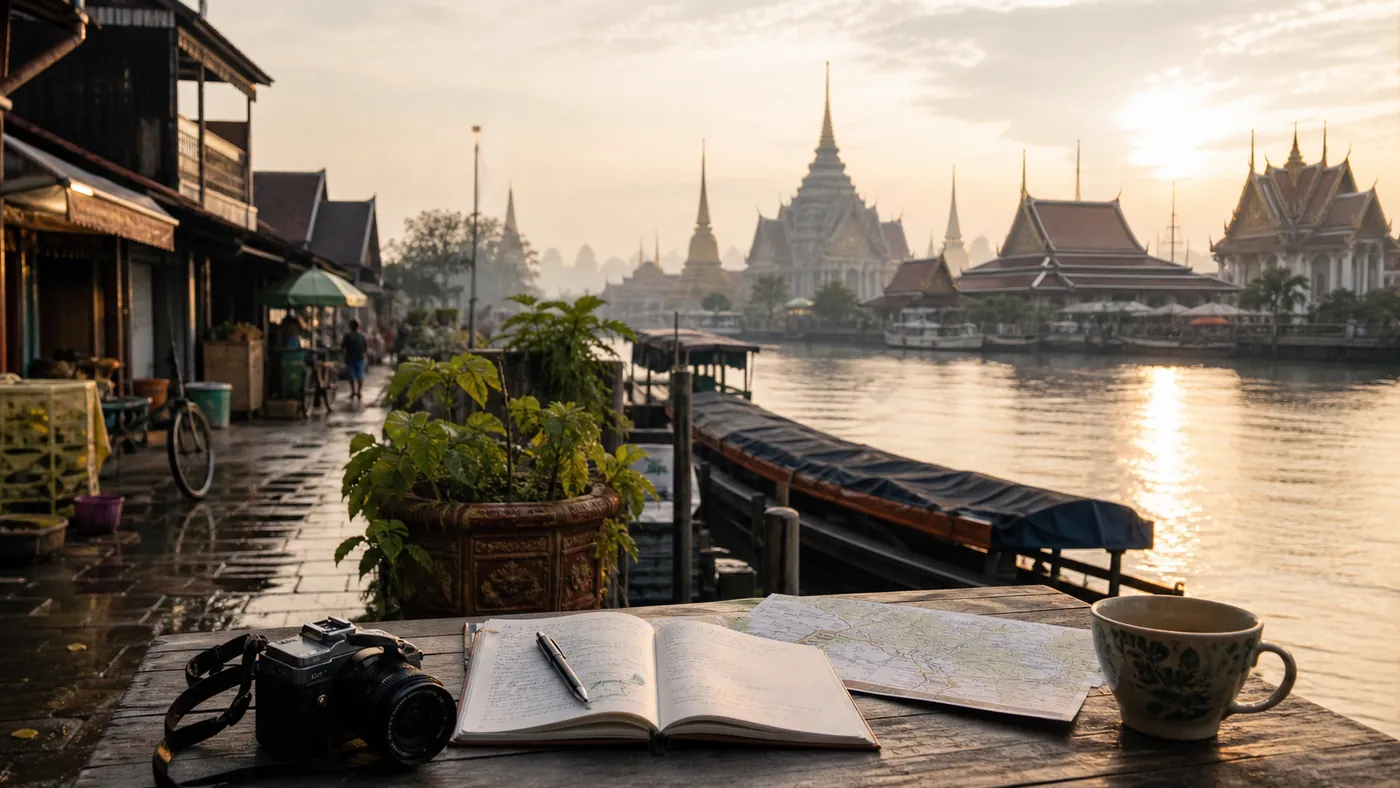
Bangkok is not a city that yields to a single itinerary. It is too layered, too warm-blooded and too contradictory for that. A first-time visitor can spend three days moving between palaces, temples, malls, river piers, food stalls and rooftop bars and still feel that the real city is happening just beyond the frame. That feeling is not failure. It is the beginning of a better way to travel here.
For an editorial traveler, Bangkok is less a checklist than a reading exercise. The city asks you to notice how water, commerce, religion, migration, design, food and climate keep crossing paths. A shrine glows at the edge of a luxury mall. A canal boat carries office workers past teak houses and concrete backsides. A family-run noodle shop sits within walking distance of a conceptual design store. A hotel lobby opens onto a street where delivery riders, monks, schoolchildren and tourists all move through the same heat.
That density is why Bangkok belongs naturally on a writer's site devoted to travel, hospitality and content strategy. It is a city that teaches the difference between attraction and atmosphere. Attractions are useful; they anchor a trip. Atmosphere is what turns the trip into memory. When a destination story only lists the obvious highlights, it misses the way a place actually persuades the traveler to care.
This guide is written for travelers who want a richer Bangkok, but also for editors, hotel teams and destination marketers thinking about how to describe a city without flattening it. It complements Jennifer's broader travel writing portfolio, the long-form essay on Thailand beyond the first impression, and her practical thinking on travel storytelling as destination content strategy. Bangkok is the example, but the method travels well: slow down, choose a frame, gather proof, and let the city argue for itself.
Read Bangkok Before You Route It
The usual Bangkok itinerary begins with names: the Grand Palace, Wat Pho, Wat Arun, Chinatown, Chatuchak, Jim Thompson House, Sukhumvit, a floating market, a rooftop bar. These can all belong in a good trip. The problem begins when names replace purpose. A stronger itinerary asks what kind of Bangkok the traveler wants to understand. Sacred Bangkok? River Bangkok? Food Bangkok? Creative Bangkok? Wellness Bangkok? A city can hold all of those, but a short trip cannot hold them equally.
Start by choosing a central question. If the question is "How does Bangkok live with water?", the river, canals, piers, old trading districts and waterside temples become the spine. If the question is "How does Bangkok eat?", markets, street stalls, family restaurants, modern Thai kitchens and regional migration matter more than another skyline stop. If the question is "How does Bangkok design itself?", the city opens through shophouse renovation, contemporary galleries, hotel interiors, public transit, markets and creative districts.
This is not an abstract exercise. It saves time and improves the trip. Bangkok's heat, traffic and scale punish over-planning. The traveler who tries to cross the city too often will remember logistics more than discovery. The better approach is to cluster days by geography and mood, then leave space for the accidental detail: the quiet soi, the unexpected lunch, the ferry ride that becomes the most vivid hour of the day.
Use the River and Canals as Structure
Bangkok's water routes are more than scenery. The Chao Phraya River gives the city a visible editorial line, connecting royal, religious, commercial and residential Bangkok. The canals add a more intimate view, where daily life still appears behind fences, laundry lines, garden edges and pier platforms. The Tourism Authority of Thailand's official travel resources are a useful starting point for understanding the city's major attractions, but the river is where those attractions begin to feel connected rather than isolated.
A river day should not be rushed. Begin early, when the light is softer and the piers are already alive. Move between Wat Pho, Wat Arun, old markets and riverside neighborhoods, but do not treat the boat as only transportation. The boat is part of the story. It shows scale, weather, industry and ritual. It also lets the traveler understand why Bangkok can feel both hyper-modern and deeply old within the same view.
Canal travel requires a little more judgment. Some tours become too theatrical; others offer a genuine glimpse of a city shaped by water. Look for operators who explain context and avoid turning residential life into spectacle. The wider principle comes from sustainable travel guidance: tourism should consider visitors, host communities, local economies and the environment together. The United Nations sustainable tourism overview is a useful reference point for that larger ethic.
Choose Neighborhoods by Mood, Not Just Convenience
Bangkok neighborhoods do different jobs. The old city gives ceremonial scale, temple craft and historical density. Chinatown offers trade, food, gold shops, herbal medicine, market pressure and an almost theatrical relationship to night. Ari brings cafes, residential calm and a softer local rhythm. Thonglor and Ekkamai show the city's contemporary hospitality language: restaurants, design-led bars, boutiques, wellness studios and residential towers. Charoen Krung mixes river history with galleries, hotels, warehouses, creative spaces and old shophouse texture.
The editorial traveler does not need to see every district. The stronger move is to choose two or three and read them closely. Walk in the morning. Return at night. Notice how the same street changes after rain, during lunch, at school pickup or when office workers leave. This kind of repetition is useful because Bangkok's details do not always announce themselves. They accumulate.
For practical planning, a focused city resource such as Bangkok can help visitors compare things to do, areas and experiences once the overall mood of the trip is clear. The key is to use lists as orientation, not as orders. A list can point you toward a neighborhood. Your attention has to do the rest.
Let Food Explain the City
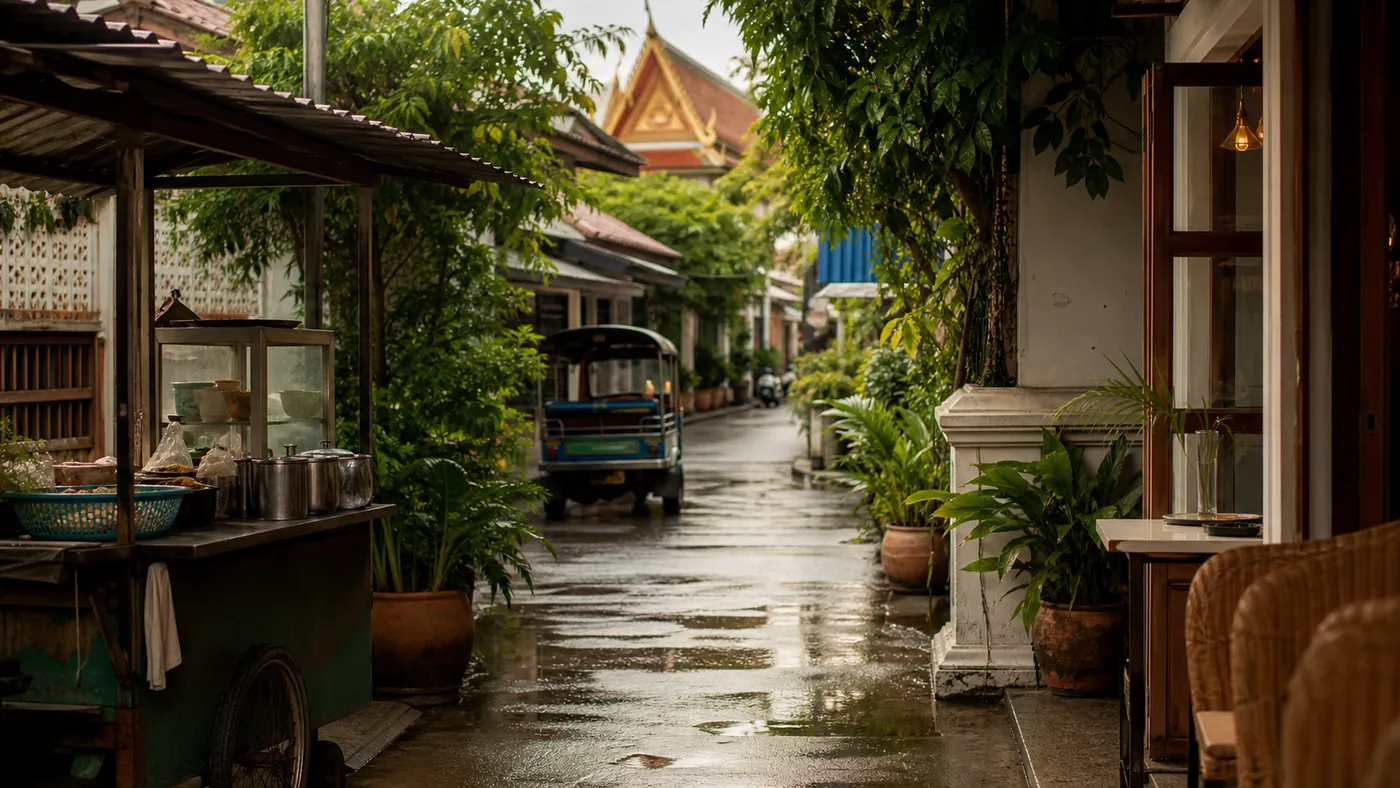
Food is Bangkok's most democratic form of storytelling. It carries migration, class, craft, neighborhood identity and family memory. A bowl of noodles can speak to Chinese-Thai history. Som tam can explain Isan influence in the capital. Southern curry can turn lunch into a map of heat, coconut, turmeric and sea. A hotel restaurant may translate regional Thai ingredients for an international audience, while a street stall may preserve a technique through repetition rather than branding.
Eating well here requires curiosity more than status. Bangkok has Michelin-starred dining, destination restaurants and famous stalls, but the city is not improved by treating every meal as a trophy. The best meals often begin with simple signs: a busy wok, a short menu, a vendor moving with practiced speed, a table of office workers who know exactly what to order. For a writer, those signs matter because they are evidence. They make the story specific.
Food also teaches travelers how to pace a day. In humid heat, smaller meals and longer pauses often work better than a rigid dining agenda. A market breakfast, a cool midday break, a late-afternoon snack and a dinner chosen by neighborhood can make the city feel more generous. The meal becomes part of the route rather than an interruption in it.
Look for Design, Not Only Landmarks
Bangkok joined the UNESCO Creative Cities Network as a City of Design in 2019, according to Thailand's Creative Economy Agency. That designation helps explain why the city should not be read only through temples and shopping malls. Design appears in renovated shophouses, typography, hotel interiors, street furniture, riverfront reuse, craft markets, galleries, transit systems and the informal adaptations that make dense urban life work.
The Bangkok City of Design initiative is useful background because it places creativity inside urban development rather than treating it as decoration. UNESCO's broader Creative Cities Network also frames creativity as part of sustainable urban development. For travelers, that means design is not only what looks beautiful. It is how a city manages movement, commerce, identity and reuse.
This is where Bangkok becomes especially interesting for hospitality and destination content. A hotel story can connect architecture to neighborhood history. A restaurant feature can connect menu design to migration and sourcing. A city guide can move from temples to river piers to galleries without feeling random, because the underlying theme is how Bangkok keeps redesigning itself without losing its older layers.
Bangkok Editorial Travel Framework
Build Bangkok Into Wider Journeys
Bangkok works beautifully as a beginning, middle or end. As a beginning, it gives travelers a soft landing with strong hotels, food, transit, museums and easy onward flights. As a middle, it resets the trip after northern mountains, island weather or temple towns. As an ending, it offers shopping, final meals, spa time, gallery visits and one last dose of urban energy before flying home.
The obvious extensions include Chiang Mai for northern food and temples, Ayutthaya for historical context, Phuket or Koh Samui for the coast, and Krabi or Koh Lanta for a slower island mood. But Bangkok can also pair with other city trips. Singapore offers a very different model of tropical urban order. Ho Chi Minh City gives another version of motorbike energy, cafe life and layered colonial/postcolonial texture. Seoul, Tokyo, Lisbon and Mexico City all reward the same editorial method: choose a frame, read neighborhoods, avoid checklist fatigue and let meals carry local intelligence.
For brand teams, that wider thinking matters because destination content rarely exists alone. A Bangkok hotel guide may support a Thailand itinerary. A Thailand itinerary may sit inside a Southeast Asia campaign. A food story may become newsletter content, sales copy or an editorial landing page. The best city writing is therefore both immediate and expandable: it helps someone travel now, and it gives the brand a durable way to explain why the place matters.
Helpful References
- Tourism Authority of Thailand for official travel information and attraction context.
- Creative Economy Agency: Bangkok City of Design for design-city background.
- UNESCO Creative Cities Network for the global framework behind creative city designations.
- United Nations sustainable tourism overview for responsible travel context.
FAQ
How many days do you need in Bangkok for a first thoughtful trip?
Three full days is the practical minimum for a first trip that goes beyond a quick highlight reel, while four or five days is much better if Bangkok is the main destination rather than a stopover. With three days, build one river-and-temple day, one neighborhood-and-food day, and one flexible day for design, markets, wellness or a deeper return to an area that caught your attention. The mistake is not having too little ambition; it is trying to cross the city repeatedly without accounting for heat, traffic and the mental energy required by Bangkok's density. A five-day stay lets you repeat places at different hours, which is often when the city becomes more legible. You can visit a market in the morning, return to a nearby lane in the late afternoon, and understand how the neighborhood changes. That repetition creates better memories and better photographs than a rushed list of disconnected landmarks. If Bangkok is part of a longer Thailand trip, leave the first afternoon gentle and the last day flexible. The city rewards energy, but it also rewards recovery. This pacing also helps travelers make better decisions about hotels, restaurants and onward travel, because they are responding to the city they have actually met rather than the city they imagined before arrival.
What is the best way to organize a Bangkok itinerary?
Organize Bangkok by geography and theme rather than by ranking attractions. Choose a controlling idea for each day: river history, old-city temples, Chinatown food, contemporary design, hotel and restaurant culture, wellness, markets or neighborhood wandering. Then cluster your route so you are not spending the day in cars. A river day might include Wat Pho, Wat Arun, ferry rides and an old market. A design day might focus on Charoen Krung, galleries, renovated shophouses and a carefully chosen restaurant. A food day might pair a morning market with a quieter afternoon and a neighborhood dinner. This structure leaves room for the weather and for curiosity. It also gives each day an editorial logic, which makes the trip easier to remember. Bangkok is a city where the best detail often appears between planned stops, so the itinerary should create space for observation rather than filling every hour. Build in one deliberate pause each day: a hotel break, a shaded cafe, a ferry ride without urgency or a return walk through a lane you noticed earlier. The best itinerary should feel like a sequence of connected chapters, not a race across a map.
How can travelers experience Bangkok respectfully?
Respect in Bangkok begins with basic cultural literacy and patient movement. Dress modestly at temples, remove shoes when required, keep your voice calm in religious spaces and avoid turning monks, worshippers or residents into background decoration for photographs. Ask before taking close pictures of people, especially vendors, workers and children. On the practical side, choose tours and experiences that explain context and treat communities as hosts rather than scenery. Be realistic about bargaining: a small discount may matter less to you than to the person selling. Bangkok is welcoming, but it is not a performance staged for visitors. The more attentively you move, the better the city becomes. Respect also improves the quality of the trip because it shifts the traveler from consumption to participation. You begin to notice etiquette, timing, gestures and small social rules, which are often the details that make a place memorable. This applies online too: captions and travel stories should avoid reducing neighborhoods to exotic backdrops and should credit real places, people and contexts where appropriate. Respectful travel does not make Bangkok less exciting; it makes the excitement more precise and less extractive.
Which Bangkok neighborhoods are best for slow travel?
Charoen Krung is one of the strongest choices for slow travel because it connects river history, creative spaces, hotels, galleries, warehouses, street food and older shophouse texture. The old city is essential for temples and ceremonial scale, but it is best experienced early and with patience. Chinatown is superb for food, trade and night atmosphere, though it can be intense for travelers who dislike crowds. Ari offers a quieter residential rhythm with cafes and local life, while Thonglor and Ekkamai show a contemporary hospitality and dining side of the city. The best neighborhood depends on the question you bring. If you want history, stay near the river or old city. If you want design and restaurants, consider Charoen Krung or Sukhumvit pockets. If you want a softer daily rhythm, Ari can be rewarding. The goal is not to find one perfect area, but to choose areas that support the mood of your trip. Stay close enough to your priority district that you can return without making every outing feel like a commute. Slow travel improves when the neighborhood becomes familiar enough that small differences from one day to the next start to matter.
How does Bangkok compare with other major city trips?
Bangkok is more improvised in feeling than Singapore, more humid and river-shaped than Tokyo, and more layered in visible daily street life than many highly managed city destinations. Compared with Ho Chi Minh City, it shares motorbike energy, cafe culture and heat, but Bangkok's river, temple vocabulary, malls, hospitality infrastructure and regional food influences create a different texture. Compared with Lisbon or Mexico City, Bangkok can feel less walkable at first, but it rewards short, focused walks once you learn to move by district and transit. For travelers planning a broader itinerary, Bangkok works well with northern Thailand, Thai islands, Angkor, Singapore, Vietnam or Japan. The same editorial travel method applies across all of them: avoid treating cities as lists, choose a theme, build days around neighborhoods, and let food, transit, local etiquette and small design decisions explain how the place works. The comparison is useful because it keeps Bangkok from being described only through intensity. It is intense, but it is also tender, ceremonial, commercial, inventive and surprisingly quiet in the right moments. That range is what makes it especially strong for repeat travel rather than a single once-and-done visit.